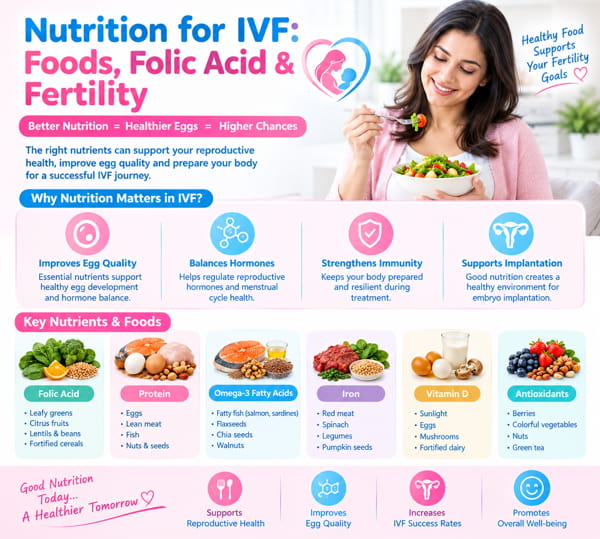
Why Nutrition Matters During IVF
When you are preparing for IVF or trying to conceive, the food you eat can help meet your nutritional needs and support your overall health before pregnancy.
A balanced diet provides essential nutrients for normal body functions, including reproductive health. However, no food, diet or supplement can guarantee IVF success, and research on whether specific dietary patterns improve assisted reproduction outcomes remains mixed.
You do not need to change everything at once. Start with manageable habits, choose a variety of foods and follow the advice of your fertility team.
Nutrition is one part of preconception health. Age, underlying medical conditions, reproductive factors and the treatment plan also influence fertility outcomes.
Top Nutrition Tips for IVF and Preconception
1. Choose Whole Grains More Often
Whole grains contain fibre and other nutrients. Choosing them more often can help support a balanced diet and steadier blood glucose levels.
Try including:
- Oats and whole-grain breakfast cereals.
- Brown rice, whole-wheat roti and whole-wheat bread.
- Quinoa, barley and other whole grains.
You can start gradually by replacing some refined grains with whole-grain alternatives. White rice and other refined grains do not need to be completely eliminated.
2. Focus on Quality Protein
Protein supports normal growth, tissue maintenance and many essential body functions. Include a variety of protein-rich foods that fit your dietary preferences.
- Plant proteins: lentils, chickpeas, beans, peas, tofu, nuts and seeds.
- Animal proteins: eggs, fish, poultry and lean, well-cooked meat.
- Dairy foods: milk, yoghurt and cheese where suitable, including pasteurised options.
A mix of plant and animal protein can help provide a range of nutrients. The amount you need depends on your individual circumstances.
3. Include Healthy Fats
Unsaturated fats are an important part of a balanced diet. Replace some foods high in saturated fat with healthier options when practical.
- Avocado.
- Walnuts, almonds and other nuts.
- Seeds such as chia, flaxseed and sesame.
- Olive oil and other unsaturated vegetable oils.
- Low-mercury fish, such as salmon and sardines.
Limit trans fats and reduce excessive intake of foods high in saturated fat. Healthy fats support general health, but they should not be viewed as a guaranteed way to improve IVF outcomes.
4. Prioritise Folate and Folic Acid
Folate is a B vitamin found naturally in foods. Folic acid is the form commonly used in supplements and fortified foods. Getting enough folic acid before and during early pregnancy helps reduce the risk of neural tube defects, including spina bifida.
Many major health authorities recommend 400 micrograms (0.4 mg) of folic acid daily for people who may become pregnant, starting at least one month before conception and continuing through the first 12 weeks of pregnancy. Your clinician may recommend a different dose in certain circumstances.
Include folate-rich foods such as:
- Spinach, broccoli and other green vegetables.
- Lentils, chickpeas and beans.
- Oranges and other fruits.
- Fortified cereals and other fortified foods.
Food sources are valuable, but they do not replace the recommended folic acid supplement for neural tube defect prevention. Do not take a high dose unless your healthcare professional recommends it.
5. Stay Hydrated and Eat Regularly
Drink water regularly throughout the day and aim for balanced meals that include vegetables or fruit, a source of protein, whole grains and healthy fats.
Your fluid and energy needs may vary with your health, activity, climate and treatment plan. Ask your clinical team if you have specific dietary or fluid restrictions.
6. Follow Food Safety Advice
Food safety becomes especially important when preparing for pregnancy and during pregnancy.
- Wash fruit and vegetables thoroughly.
- Cook meat, fish and eggs safely.
- Choose pasteurised milk and dairy products.
- Avoid high-mercury fish and follow local pregnancy food-safety guidance.
- Discuss caffeine, alcohol and any foods of concern with your healthcare professional.
Your clinic can advise on food safety recommendations relevant to your circumstances and local guidance.
A Helpful Overall Approach: Mediterranean-Style Eating
A Mediterranean-style eating pattern emphasises plant foods, whole grains, legumes, nuts, unsaturated fats and a variety of protein sources. Some observational studies have explored links between this pattern and assisted reproduction outcomes, but findings are not consistent enough to promise improved IVF success.
Vegetables and Fruits
Choose a variety of colourful produce throughout the day. Fresh, frozen and suitable canned options can all be useful.
Whole Grains and Legumes
Include oats, whole grains, beans, chickpeas and lentils for fibre, protein and other nutrients.
Unsaturated Fats
Use foods such as nuts, seeds, olive oil and avocado as part of balanced meals.
Varied Protein Sources
Include beans, lentils, fish, eggs, poultry and other suitable protein sources according to your preferences.
This is a flexible eating pattern, not a strict IVF diet. Adapt it to your culture, budget, food preferences and medical requirements.
Do You Need Supplements During IVF?
Folic acid is an important preconception recommendation. Other supplements should be chosen according to your individual needs, diet, medical history and laboratory results.
- Folic acid: Generally recommended before conception and during early pregnancy to reduce neural tube defect risk.
- Vitamin D: Supplementation may be appropriate depending on your diet, risk factors, test results and local clinical guidance.
- Omega-3: Dietary sources include suitable low-mercury fish. Ask your clinician whether a supplement is needed.
- CoQ10 and DHEA: Evidence for improving fertility outcomes is limited or mixed. DHEA can have side effects and should not be started without medical advice.
Practical Nutrition Summary for IVF
Start with small changes that are realistic for your routine.
- Choose whole grains more often.
- Include a variety of plant and other protein sources.
- Use unsaturated fats and limit trans fats.
- Take the recommended folic acid supplement.
- Eat a variety of vegetables, fruits and legumes.
- Discuss supplements and special dietary needs with your care team.
Enjoy your favourite foods in moderation. You do not need to follow a restrictive diet or feel guilty about an occasional treat. Consistent, balanced habits are a practical goal.
Have Questions About Fertility Treatment?
Contact Select A Baby for information and patient coordination support.
Contact UsFrequently Asked Questions About Nutrition for IVF
Final Thoughts: Nutrition During Your IVF Journey
Nutrition is one part of preparing for pregnancy. A varied, balanced diet can help meet your nutritional needs and support your overall wellbeing while you undergo fertility treatment.
Focus on practical habits: whole grains, vegetables, fruits, quality protein, healthy fats and the recommended folic acid supplement. Avoid unproven claims that specific foods or supplements can guarantee pregnancy.
If you have a medical condition, follow a restricted diet or are considering supplements, ask your fertility specialist or a registered dietitian for personalised advice.
Medical References and Further Reading
These public health resources and professional organisations provide additional information about preconception nutrition and fertility.
-
Centers for Disease Control and Prevention (CDC).
About Folic Acid.
Information about folic acid and prevention of neural tube defects.
Read CDC guidance -
World Health Organization (WHO).
Daily iron and folic acid supplementation during pregnancy.
Read WHO guidance -
American Society for Reproductive Medicine (ASRM).
Professional guidance and committee publications on fertility
and reproductive health.
Browse ASRM practice guidance -
PubMed.
Research literature on Mediterranean-style diets and assisted
reproductive technology outcomes.
Explore relevant peer-reviewed research -
PubMed.
Research reviews on nutrition, dietary patterns and fertility.
Explore nutrition and fertility reviews
Medical Disclaimer
This article is for general educational purposes only and does not replace professional medical advice, diagnosis or treatment. Nutritional requirements vary according to individual health, pregnancy plans and medical conditions. Speak with a qualified healthcare professional before starting or changing supplements. Select A Baby provides fertility information and patient coordination support; medical care is provided by appropriately licensed healthcare professionals and clinics.
Have Questions About Preparing for IVF?
Explore fertility information and discuss your individual nutritional needs with your fertility specialist or a registered dietitian.
Contact Select A Baby