Male fertility is an important part of the IVF journey. Sperm health can be influenced by medical conditions, age and everyday habits. This guide explains practical steps that may support sperm health before IVF or when trying to conceive naturally.
Educational information only. Lifestyle changes cannot replace a fertility evaluation or guarantee pregnancy.
Healthy habits can support general health and may help improve some semen parameters. Individual results vary.
Why Male Fertility Matters Equally
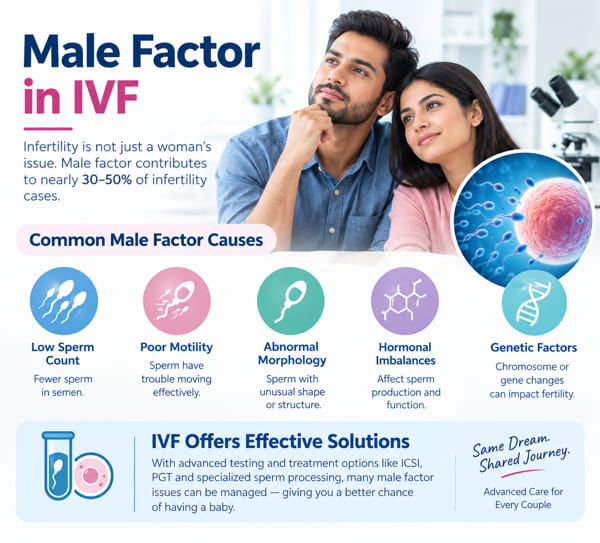
When couples experience difficulty conceiving, attention can sometimes focus mainly on female fertility. However, male factors contribute to infertility in a substantial proportion of couples, either alone or alongside female factors.
Sperm health is assessed through several measures, including sperm concentration, movement (motility) and shape (morphology). A semen analysis is a key part of the initial assessment, although no single semen parameter can fully predict whether conception will occur.
Lifestyle choices may influence sperm health, but some causes of male infertility require medical investigation or treatment. It is important not to assume that a fertility problem is caused by lifestyle alone.
Sperm production and maturation take roughly two to three months. Making sustainable changes around three months before trying to conceive or starting IVF may therefore be a useful goal. However, not every change produces measurable improvement, and treatment should not be delayed when medical evaluation is needed.
10 Lifestyle Choices That May Support Better Sperm Health
1. Achieve and Maintain a Healthy Weight
Excess body weight, particularly obesity, has been associated with hormonal changes and poorer semen parameters in some men. It may also be linked with metabolic health concerns that affect reproductive function.
If weight management is appropriate for you, aim for gradual, sustainable changes through balanced meals, regular activity and adequate sleep. Avoid crash diets or extreme exercise plans. Weight loss may help some men, but it does not guarantee improved fertility.
2. Stop Smoking and Avoid Second-Hand Smoke
Smoking is associated with poorer semen quality and can expose the body to substances that may contribute to oxidative stress. Second-hand smoke can also affect the health of your partner.
Quitting smoking is a positive step for overall health and may support reproductive health over time. If stopping is difficult, ask your healthcare professional about evidence-based cessation support.
3. Reduce or Avoid Alcohol
Heavy or chronic alcohol consumption can affect hormones, sexual function and reproductive health. The effect of lower levels of alcohol on semen parameters is less consistent across studies.
If you are preparing for IVF or trying to conceive, consider avoiding heavy drinking and discuss your alcohol use with your clinician. If you drink heavily or daily, seek medical advice before stopping suddenly, as withdrawal can be dangerous for some people.
4. Avoid Recreational Drugs and Anabolic Steroids
Anabolic steroids and testosterone taken from outside the body can suppress the hormonal signals required for sperm production and may cause a substantial reduction in sperm count, sometimes including no sperm in the semen.
Some recreational drugs may also affect sexual function, hormones or reproductive health. Evidence varies by substance and pattern of use, but avoiding non-prescribed drugs is a prudent step when preparing for conception.
Important: Do not stop prescribed medication without medical advice. If you use testosterone therapy or anabolic steroids, tell your fertility specialist. A clinician can discuss safer options if fertility is a goal.
5. Exercise Regularly
Regular moderate exercise supports cardiovascular health, weight management, mood and metabolic health. These benefits may indirectly support reproductive health.
Aim for an activity routine that suits your current fitness and health, such as brisk walking, cycling or swimming. Build up gradually and include rest and recovery. Very intense training, inadequate nutrition or certain performance-enhancing drugs may have negative effects.
6. Manage Stress and Protect Sleep
Stress can affect wellbeing, sexual desire and relationships. Sleep problems and chronic stress may also be associated with hormonal and lifestyle factors relevant to fertility, although their direct effects on semen quality vary.
Consider regular sleep times, breathing exercises, walking, meditation or counselling if stress is difficult to manage. These strategies can improve wellbeing during fertility treatment, even when their effect on sperm parameters is uncertain.
7. Be Sensible About Heat Exposure
Sperm production is sensitive to temperature. Repeated or prolonged exposure to high temperatures around the testes may affect sperm production in some men.
If you regularly use saunas or very hot baths, consider discussing this with your clinician while preparing for conception. Take breaks from prolonged sitting for general health and comfort.
Evidence that tight underwear or ordinary laptop use has a meaningful effect on fertility is limited. Avoid unnecessary prolonged heat exposure without becoming overly concerned about everyday activities.
8. Eat a Balanced, Fertility-Friendly Diet
A balanced eating pattern supports overall health and provides nutrients needed for normal reproductive function. Research has linked dietary patterns rich in vegetables, fruit, whole grains, nuts, legumes and fish with better semen measures in some populations, although this does not prove that a particular diet will improve IVF outcomes.
Practical food choices include:
- Vegetables and fruits of different colours.
- Whole grains, beans, lentils and other legumes.
- Nuts and seeds, where suitable for your diet.
- Fish and other appropriate sources of protein.
- Unsaturated fats, such as olive oil and other vegetable oils.
- Less frequent consumption of highly processed foods, excess added sugar and processed meat.
Nutrients such as zinc, folate, vitamin B12 and omega-3 fatty acids play roles in normal body function. Aim to obtain them through a varied diet where possible. Supplements are not a substitute for investigating a fertility problem.
9. Consider Age and Your Reproductive History
Male fertility changes with age, although the decline is generally more gradual than the age-related decline in female fertility. Older paternal age can be associated with changes in semen parameters and an increased risk of some reproductive and genetic outcomes.
Age alone cannot determine an individual's fertility. If you have concerns about conception, a semen analysis and clinical assessment can provide more useful information than relying on age or symptoms alone.
10. Speak to a Doctor Early
A medical evaluation is especially important if you have a history of undescended testes, testicular injury or surgery, cancer treatment, genital infections, sexual or hormonal problems, or a known genetic condition that may affect fertility.
Tell your doctor about all medications and supplements you take. Some treatments, including external testosterone, can suppress sperm production. Your clinician may recommend a semen analysis, hormone testing, examination or referral to a reproductive urologist, depending on your history and results.
Both partners should be assessed when infertility is suspected. Do not delay evaluation simply to try lifestyle changes first, especially when there are known medical risk factors.
Should You Take Supplements to Improve Sperm Quality?
Fertility supplements are often marketed as a way to improve sperm count, motility or DNA quality. Some contain antioxidants, zinc, selenium, folate, coenzyme Q10 or other ingredients.
However, evidence for many supplements is mixed. It is not clear that taking antioxidants routinely improves the chance of pregnancy or live birth for all men with infertility. High doses of certain nutrients can also cause side effects or interact with medicines.
A clinician can help determine whether you have a nutritional deficiency or a specific reason to consider supplementation. Avoid taking multiple fertility products at the same time without professional guidance.
What Is a Semen Analysis?
A semen analysis is a common first-line test used to assess male reproductive potential. Depending on the laboratory, it typically evaluates:
- Semen volume: The amount of semen in the sample.
- Sperm concentration: The number of sperm per unit of semen.
- Total sperm number: The total number of sperm in the sample.
- Motility: How sperm move.
- Morphology: The proportion of sperm with a typical shape under laboratory criteria.
A semen analysis does not directly measure every aspect of fertility. Results can vary between samples, and an abnormal result may need confirmation or further investigation. Your doctor will interpret the report alongside your medical history and, when relevant, your partner's fertility assessment.
If sperm numbers are very low or no sperm are found, prompt specialist evaluation is important because some causes may have specific treatment options.
Have Questions About Fertility Treatment?
Contact Select A Baby for information and patient coordination support.
Contact UsFrequently Asked Questions About Male Fertility and IVF
Final Thoughts
Male fertility is an important part of the IVF journey. Healthy habits such as eating a balanced diet, exercising regularly, avoiding smoking and recreational drugs, maintaining a healthy weight and managing stress can support general health and may help improve some aspects of sperm quality.
Changes often need time, and not every cause of male infertility can be addressed through lifestyle alone. A semen analysis and appropriate medical evaluation can help identify whether additional treatment is needed.
Start with sustainable changes, involve your fertility team early and remember that fertility assessment is a shared process for both partners.
References and Further Reading
-
American Urological Association (AUA) and American Society for Reproductive
Medicine (ASRM). Diagnosis and Treatment of Infertility in Men:
AUA/ASRM Guideline.
Read the AUA Male Infertility Guideline -
American Society for Reproductive Medicine. Practice guidance and resources
relating to male infertility and reproductive care.
Explore ASRM practice guidance -
World Health Organization. WHO laboratory manual for the examination and
processing of human semen. Sixth edition, 2021.
Read the WHO semen laboratory manual -
PubMed. Research literature on lifestyle factors, diet, smoking, obesity and
semen quality.
Search peer-reviewed research on male fertility and lifestyle
These resources are provided for further reading. Research findings vary, and general lifestyle recommendations may not apply to every individual.
Medical Disclaimer
This article is for general educational purposes and is not a substitute for personalised medical advice, diagnosis or treatment. Select A Baby provides information and patient-coordination support; medical evaluation and treatment should be provided by appropriately licensed healthcare professionals. Do not stop prescribed medication or begin fertility supplements without consulting your clinician.
Have Questions About IVF and Fertility?
Learn more about fertility care and prepare questions to discuss with your fertility specialist.
Contact Select A Baby