Educational information for people considering IVF
What Is Hysteroscopy?
Hysteroscopy is a procedure that allows a clinician to look inside the uterus using a thin instrument with a camera or light, called a hysteroscope. It is passed gently through the vagina and cervix into the uterine cavity; no abdominal incision is needed.
Hysteroscopy may be performed in an outpatient setting or in a hospital, depending on the reason for the procedure, the treatment planned, the equipment available, and the patient's needs. Pain relief may include no anaesthesia, local anaesthesia, sedation, or general anaesthesia.
Before embryo transfer, it may be used to investigate a suspected problem inside the uterus and, when appropriate, treat certain findings. It is not required for every person undergoing IVF.
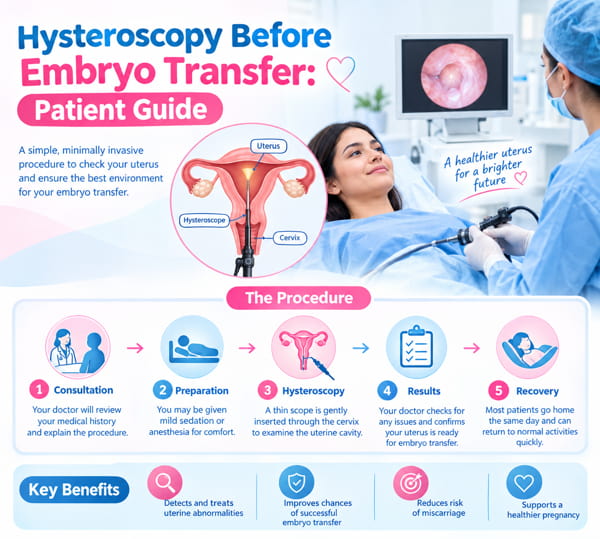
Educational illustration only. Actual anatomy and hysteroscopy findings vary; this image cannot be used for diagnosis.
Why Do Doctors Sometimes Recommend Hysteroscopy Before Embryo Transfer?
Hysteroscopy can provide a direct view of the uterine cavity. A specialist may recommend it when symptoms, medical history, or imaging suggest that a closer examination could change treatment.
1. To investigate a suspected uterine-cavity problem
Hysteroscopy can help identify selected abnormalities, such as endometrial polyps, adhesions (scar tissue), or fibroids that extend into the uterine cavity. Ultrasound and other imaging tests are also useful, and the best first test depends on the clinical situation.
2. To assess or treat selected polyps, fibroids, or adhesions
If a finding is confirmed and considered clinically relevant, the clinician may be able to treat it during the same procedure or plan a separate treatment. Not every polyp or fibroid requires removal, and the decision depends on its size, location, symptoms, and the patient's circumstances.
3. To investigate a possible uterine-shape difference
Hysteroscopy may help assess the inside of the uterine cavity. Some uterine-shape differences need additional imaging, such as three-dimensional ultrasound or MRI, because hysteroscopy alone may not show the external contour of the uterus.
4. After previous unsuccessful embryo transfers or with relevant symptoms
In selected cases—such as suspected cavity abnormalities, abnormal uterine bleeding, or certain histories of unsuccessful treatment—a specialist may recommend further evaluation. The benefit depends on the reason for testing and the evidence for the suspected problem.
5. To personalise the treatment plan
The findings may help the fertility team decide whether treatment is needed before transfer. Hysteroscopy does not guarantee implantation, pregnancy, or live birth, and it should be recommended for a clear clinical reason.
Is Hysteroscopy Needed Before Every Embryo Transfer?
No. Routine hysteroscopy is not recommended for every patient when the uterine cavity appears normal and there is no specific clinical indication. Evidence has not established a clear benefit from routinely performing screening hysteroscopy in all patients before IVF.
It may be considered when:
- Ultrasound or another test suggests a possible abnormality in the uterine cavity.
- There is unexplained or persistent abnormal uterine bleeding.
- Adhesions or other cavity changes are suspected, including after certain procedures or infections.
- The fertility specialist believes further assessment is justified after reviewing previous treatment and clinical history.
Previous unsuccessful transfers alone do not mean that hysteroscopy is automatically required. Discuss the likely benefit, alternatives, costs, and risks with your specialist. See the Cochrane review of screening hysteroscopy and the ESHRE recommendations on add-ons in reproductive medicine.
What Happens During the Procedure?
The exact process depends on whether the procedure is diagnostic (to look inside the uterus) or operative (to treat a finding).
- Preparation: The clinic reviews your history, pregnancy possibility, medicines, and the type of pain relief planned.
- Insertion: A thin hysteroscope is gently passed through the vagina and cervix into the uterus.
- Examination: Sterile fluid is commonly used to expand the cavity so the clinician can inspect it.
- Treatment if needed: Selected small findings may be treated during the same procedure if appropriate and consented to.
- Recovery: The team monitors you as needed and explains aftercare and follow-up.
A diagnostic procedure may be brief, but duration varies. Operative procedures can take longer. Outpatient hysteroscopy is possible for many patients, while some procedures require sedation, anaesthesia, or a hospital setting.
Is Hysteroscopy Safe? What Are the Risks?
Hysteroscopy is commonly performed, but no procedure is completely risk-free. Possible effects include cramping, spotting, or temporary discomfort. Less common complications can include infection, heavy bleeding, injury to the uterus or cervix, or complications related to the fluid used during the procedure or to anaesthesia.
Ask your clinician which risks apply to your planned procedure and what pain relief is available. Follow the clinic's instructions about medicines, eating and drinking, and returning to normal activities.
Seek urgent medical advice after the procedure if you develop severe or worsening pain, heavy bleeding, fever, foul-smelling discharge, fainting, or other symptoms your clinic has identified as warning signs.
Recovery and Timing Before Embryo Transfer
Recovery depends on whether hysteroscopy was diagnostic or included treatment. Some patients resume usual activities quickly, while others need more time. Light bleeding or period-like cramps can occur for a short period.
There is no single waiting period that is right for everyone. The timing of embryo transfer depends on what was found or treated, healing, any further tests or treatment needed, and the clinic's protocol. Your fertility specialist should confirm when it is appropriate to proceed.
For more information about treatment planning, read our guide to the IVF process for international patients in Dubai.
Need information about IVF in Dubai?
Contact our coordinators for information about planning a visit and connecting with fertility care providers.
Send an enquiryFrequently Asked Questions
Is hysteroscopy painful?
Experience varies. Some people feel cramping or discomfort; others tolerate an outpatient procedure well. Pain relief options vary by setting and procedure, so ask the clinic what is planned and tell the clinician about any previous difficult examinations.
Will hysteroscopy definitely improve my IVF success rate?
No. It may be useful when a relevant uterine-cavity problem is identified and treated, but it does not guarantee better outcomes. Routine screening when tests are normal has not shown a clear benefit for everyone.
Does hysteroscopy reduce the risk of miscarriage?
It should not be assumed to reduce miscarriage risk in every patient. The effect depends on the underlying condition and the evidence for treating it. Ask your specialist about the expected benefit for your specific finding.
Do I need hysteroscopy before every embryo transfer?
No. Repeat hysteroscopy is not routinely needed for every transfer. It may be considered if new symptoms or findings develop or your specialist identifies a specific reason to reassess the uterine cavity.
Can hysteroscopy be done without hospital admission?
Many diagnostic procedures can be performed in an outpatient clinic. More complex treatment or a need for anaesthesia may require a hospital or day-surgery setting.
How soon after hysteroscopy can I have an embryo transfer?
The timing varies with the findings and whether treatment was performed. Your fertility specialist will advise when the uterus has recovered sufficiently and whether any additional treatment or review is needed.
Final Thoughts
Hysteroscopy can be a useful way to investigate and, in selected cases, treat problems inside the uterine cavity. It is not necessary for everyone before embryo transfer, and its benefits depend on the patient's history and findings.
Discuss your ultrasound results, previous treatment, symptoms, and alternatives with a qualified fertility specialist before deciding whether hysteroscopy is appropriate for you.
References and Further Reading
- Kamath MS, Bosteels J, D'Hooghe TM, et al. Screening hysteroscopy in subfertile women and women undergoing assisted reproduction. Cochrane Database of Systematic Reviews. 2019. PubMed record | Cochrane summary | DOI.
- ESHRE Add-ons Working Group. Good practice recommendations on add-ons in reproductive medicine. Human Reproduction. 2023. PubMed record | DOI | ESHRE guidance page.
- Practice Committee of the American Society for Reproductive Medicine. Fertility evaluation of infertile women: a committee opinion. Fertility and Sterility. 2021. PubMed record | ASRM guidance.
These references provide general clinical context and do not replace individual medical advice. Review the article and references with a qualified fertility professional before publication.